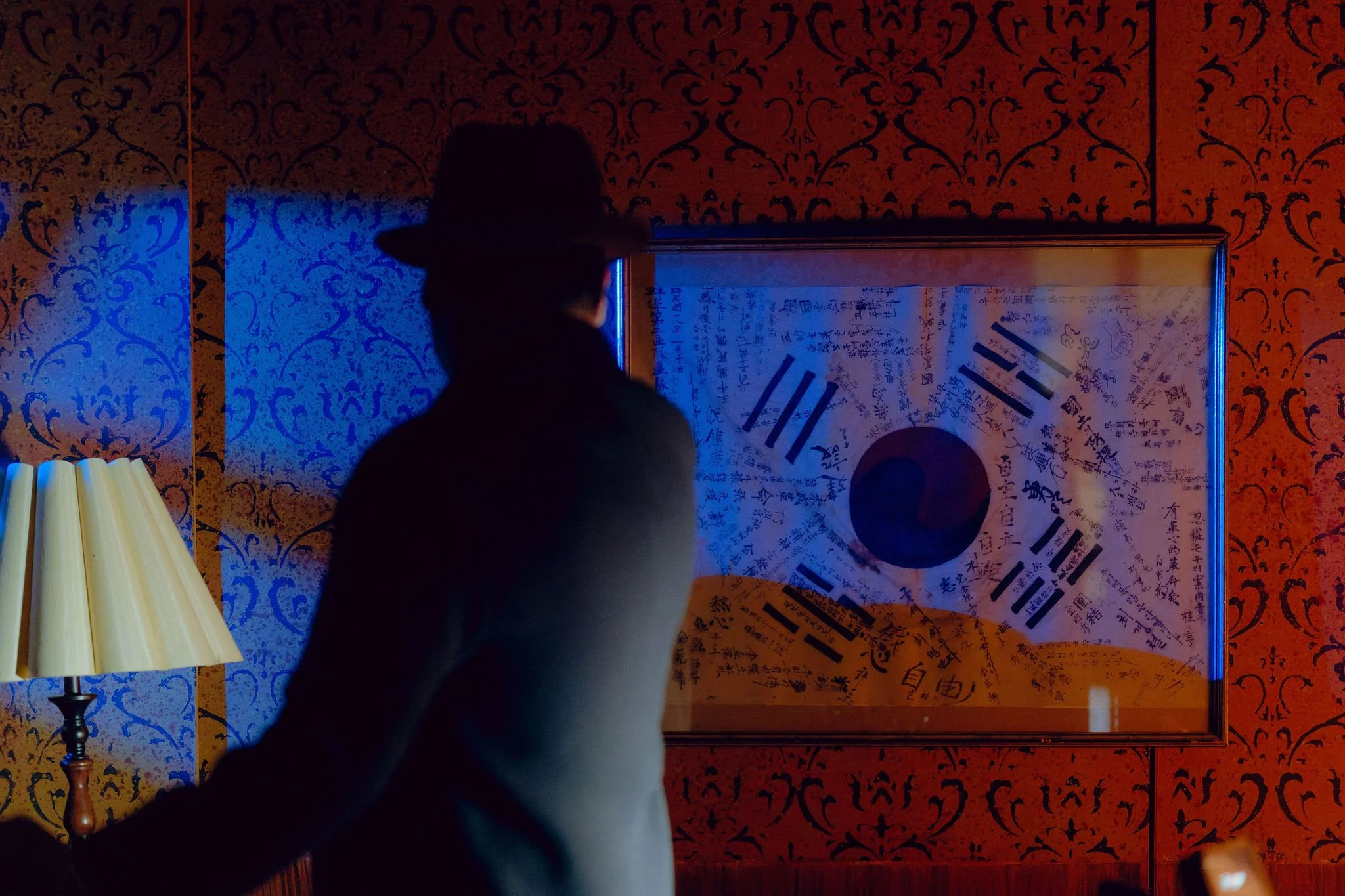
THE ROAD will not stage historical violence with actors. It will place verifiable photographs and documents beside contemporary places and observed actions, letting the past appear through the marks it has left in the present. When context is needed, historians will help locate the limits of the record. The film will give equal attention to objects held by families, the time it takes to travel and the silences between spoken accounts.
The road is a real passage between scenes, not an ornamental metaphor. Streets in Seoul, rail lines in the Russian Far East, the sea between Busan and Shimonoseki, the mine entrance at Ube, a crossing in Tokyo and the pavements of Berlin bear different kinds of movement under different kinds of power. Music will be restrained. Wind, trains, a ship's engine, paper and footsteps will carry much of the sound. The final scene will not tell the audience what to feel. It will leave them with a road people are still walking.